Designing for Gym Anxiety
Klaro, a Smartwatch Guide for Beginners
market validation
Designing for Gym Anxiety
Klaro’s Smartwatch UX
from Insight to MVP
A media
recognition app
concept tested
through rapid
Thesis Project
16 weeks
28 weeks
Dec 2025
Role: Product Designer
Project Summary
Project Summary
What is this project about?
What is this project about?
The problem
The problem
Beginners avoid unfamiliar machines and delay asking for help because they fear being judged. That hesitation leads to skipped workouts and low confidence and early drop-off rates.
Beginners avoid unfamiliar machines and delay asking for help because they fear being judged. That hesitation leads to skipped workouts and low confidence and early drop-off rates.
What I built
What I built
Klaro is a smartwatch-first gym companion that helps beginners find equipment, set it up correctly, and move through workouts with discreet, step-by-step guidance without drawing attention.
Klaro is a smartwatch-first gym companion that helps beginners find equipment, set it up correctly, and move through workouts with discreet, step-by-step guidance without drawing attention.
My Role
My Role
Led end-to-end UX research, synthesis, and product design
Planned and conducted user interviews and in-gym usability tests
Designed the Klaro smartwatch app experience, including key flows, IA, and interaction patterns
Built and validated low-fidelity prototypes (map, help flow, landing page)
Led end-to-end UX research, synthesis, and product design
Planned and conducted user interviews and in-gym usability tests
Designed the Klaro smartwatch app experience, including key flows, IA, and interaction patterns
Built and validated low-fidelity prototypes (map, help flow, landing page)
Quick facts
Quick facts
Platform: Apple Watch-first with supporting mobile onboarding
Setting: Real gym floor where uncertainty feels public
Timeline: 16 weeks
Team: Solo project with advisor feedback and trainer input
Platform: Apple Watch-first with supporting mobile onboarding
Setting: Real gym floor where uncertainty feels public
Timeline: 16 weeks
Team: Solo project with advisor feedback and trainer input
Impact
Impact
Early impact from Klaro’s validation tests
Early impact from Klaro’s validation tests
+1–2 pts
Confidence increase after Klaro-guided test
Confidence increase after Klaro-guided test
Self-rated confidence (1–5) measured pre vs post pretotype test (n=4)
40% faster
Equipment discovery with guided navigation
Equipment discovery with guided navigation
Two-condition test: map mvp vs no map (2 people each). Map group was 40% faster.
14%
Waitlist sign-up rate for a smartwatch gym companion
Waitlist sign-up rate for a smartwatch gym companion
From an Instagram ad: 49 landing-page visits → 7 waitlist signups (14%).
Context
Context
Beginners need guidance that doesn’t put them
on display
Beginners need guidance that doesn’t put them on display
Beginners avoid unfamiliar equipment and delay asking for help because they fear being watched or judged. When uncertainty is public, even small mistakes feel high-risk, so they stick to “safe” areas or skip workouts. That shows up when someone can’t find a machine, doesn’t know how to adjust it, or freezes mid-set because they’re unsure what to do next.
This slows learning and keeps confidence low. For gyms, it drives early drop-off, underused equipment, and higher churn before habits form.
Beginners avoid unfamiliar equipment and delay asking for help because they fear being watched or judged. When uncertainty is public, even small mistakes feel high-risk, so they stick to “safe” areas or skip workouts. That shows up when someone can’t find a machine, doesn’t know how to adjust it, or freezes mid-set because they’re unsure what to do next.
This slows learning and keeps confidence low. For gyms, it drives early drop-off, underused equipment, and higher churn before habits form.
Why it Matters
Why it Matters
Early gym anxiety decides whether beginners build a habit or drop off
Early gym anxiety decides whether beginners build a habit or drop off
The first few weeks are decisive. Small moments of confusion (especially in public) compound into avoidance: fewer machines tried, shorter sessions, and lower confidence to return.
For gyms, that same hesitation shows up as early churn. New members who feel lost use less of the floor, rely on crowded “easy” zones, and stop showing up before the habit forms. Reducing this early friction improves retention, increases equipment utilization, and creates a more welcoming experience without adding staff workload.
The first few weeks are decisive. Small moments of confusion (especially in public) compound into avoidance: fewer machines tried, shorter sessions, and lower confidence to return.
For gyms, that same hesitation shows up as early churn. New members who feel lost use less of the floor, rely on crowded “easy” zones, and stop showing up before the habit forms. Reducing this early friction improves retention, increases equipment utilization, and creates a more welcoming experience without adding staff workload.
Research
Research
Understanding what actually stops beginners from asking for help
Understanding what actually stops beginners from asking for help
To understand why beginners hesitate in the gym, I conducted 12 interviews with beginner and intermediate gym-goers, plus 1 stakeholder interview with a gym trainer. All sessions were run remotely over Zoom, focused on first-week experiences, moments of confusion, and how people decide whether to seek help.
Across interviews, three themes kept repeating:
Feeling watched makes uncertainty feel risky in public
Body comparison amplifies self-consciousness near unfamiliar machines
Asking for help feels like a “public moment,” so people avoid it
To understand why beginners hesitate in the gym, I conducted 12 interviews with beginner and intermediate gym-goers, plus 1 stakeholder interview with a gym trainer. All sessions were run remotely over Zoom, focused on first-week experiences, moments of confusion, and how people decide whether to seek help.
Across interviews, three themes kept repeating:
Feeling watched makes uncertainty feel risky in public
Body comparison amplifies self-consciousness near unfamiliar machines
Asking for help feels like a “public moment,” so people avoid it
To understand why beginners hesitate in the gym, I conducted 12 interviews with beginner and intermediate gym-goers, plus 1 stakeholder interview with a gym trainer. All sessions were run remotely over Zoom, focused on first-week experiences, moments of confusion, and how people decide whether to seek help.
Across interviews, three themes kept repeating:
Feeling watched makes uncertainty feel risky in public
Body comparison amplifies self-consciousness near unfamiliar machines
Asking for help feels like a “public moment,” so people avoid it
Participants: beginners + intermediate gym-goers, focused on first-week experiences and moments of uncertainty (remote interviews).
Participants: beginners + intermediate gym-goers, focused on first-week experiences and moments of uncertainty (remote interviews).
P2
P2
Beginner lifter
Beginner lifter
I felt that maybe I’m being judged for the less amount of plates I’m pushing.
I felt that maybe I’m being judged for the less amount of plates I’m pushing.
P3
P3
New gym member
New gym member
I used to feel inferior to people who had a lean body or something.
I used to feel inferior to people who had a lean body or something.
P11
P11
New gym member
New gym member
I didn’t want to ask for help because it feels awkward to do so when you basically don't know anything.
I didn’t want to ask for help because it feels awkward to do so when you basically don't know anything.
P7
P7
Intermediate gym-goer
Intermediate gym-goer
They're pulling a lot more weight, they're going to be judging me with my 5 kg dumbbell every day.
They're pulling a lot more weight, they're going to be judging me with my 5 kg dumbbell every day.
Core Insight
Core Insight
Gymtimidation is reinforced by hesitation to seek help
Gymtimidation is reinforced by hesitation to seek help
Beginners don't struggle because they lack information. They struggle because asking for help in a public gym feels risky. Uncertainty becomes a “visible moment,” so people avoid unfamiliar equipment and stay in safe zones.
Instead of reaching out, beginners avoid unfamiliar equipment, stay in safe zones, or imitate others without confidence. Over time, this hesitation prevents learning and reinforces anxiety.
Design takeaway: Support must feel private and socially low risk to be effective.
Scientifically, I confirmed that delaying caffeine allows adenosine levels to rise to a point where coffee can have a stronger effect.
This research shaped early design decisions, such as including progress tracking, recipe suggestions, and an onboarding moment that reframed the delay as a challenge instead of a punishment.
How might we reduce beginners’ hesitation to seek help in the gym so they can confidently engage with unfamiliar equipment and spaces?
How might we reduce beginners’ hesitation to seek help in the gym so they can confidently engage with unfamiliar equipment and spaces?
Feels exposed
Worried others are watching or judging
Plays it safe
Sticks to familiar areas and skips new machines
Help feels risky
Asking feels like a public moment
Confidence drops
Doubts ability to use equipment correctly
Design Direction
Design Direction
The goal was not to teach workouts or replace trainers
The goal was not to teach workouts or replace trainers
It was to lower the social friction beginners feel at the exact moment they are unsure. From there, I set three guiding principles for the solution:
Discreet guidance that doesn’t put users on display
In-the-moment help available exactly when someone gets stuck
Confidence building through small wins and reduced uncertainty
Success meant beginners could try new equipment, navigate unfamiliar areas, and get help without feeling exposed.
Design Challenges
Design Challenges
The challenge was building confidence in moments where mistakes feel public
The challenge was building confidence in moments where mistakes feel public
Designing for Social Risk
Designing for Social Risk
Beginners don’t avoid the gym because it’s hard. They avoid being seen struggling.
Beginners don’t avoid the gym because it’s hard. They avoid being seen struggling.
Keeping the Watch Experience Effortless
Keeping the Watch Experience Effortless
Guidance had to be glanceable and fast, not another app that demands attention mid-workout.
Guidance had to be glanceable and fast, not another app that demands attention mid-workout.
Balancing Watch vs Phone Roles
Balancing Watch vs Phone Roles
The watch needed to handle “in-the-moment” help, while the phone supported setup and planning without stealing the core experience.
The watch needed to handle “in-the-moment” help, while the phone supported setup and planning without stealing the core experience.
The Solution
The Solution
Klaro reduces gym anxiety by guiding beginners privately, in the moment
Klaro reduces gym anxiety by guiding beginners privately, in the moment
Klaro is a smartwatch-first gym navigation and support system designed for beginners who feel watched or judged. Instead of asking people to “be more confident,” it removes the risky moments where uncertainty becomes public.
Klaro is a smartwatch-first gym navigation and support system designed for beginners who feel watched or judged. Instead of asking people to “be more confident,” it removes the risky moments where uncertainty becomes public.
On the watch, Klaro gives quiet, step-by-step guidance to find the right machine, set it up correctly, and start without hesitating. When someone gets stuck, they can request help with one tap, without needing to look around or approach staff in front of others.
On the watch, Klaro gives quiet, step-by-step guidance to find the right machine, set it up correctly, and start without hesitating. When someone gets stuck, they can request help with one tap, without needing to look around or approach staff in front of others.
Klaro works as a simple ecosystem:
Klaro works as a simple ecosystem:
Smartwatch (core experience): discreet navigation, machine setup cues, and one-tap help
Mobile app (supporting layer): onboarding, preferences, planning, reflection
Gym layer (real-world context): mapped layout + indoor positioning to make guidance accurate
Smartwatch (core experience): discreet navigation, machine setup cues, and one-tap help
Mobile app (supporting layer): onboarding, preferences, planning, reflection
Gym layer (real-world context): mapped layout + indoor positioning to make guidance accurate
The goal is simple: reduce visible uncertainty, so beginners try more equipment, ask for help sooner, and feel confident returning.
The goal is simple: reduce visible uncertainty, so beginners try more equipment, ask for help sooner, and feel confident returning.
Core Experience
How Klaro supports beginners in the moments that matter most
Klaro’s value is felt during a few critical moments when hesitation typically stops beginners from moving forward. The smartwatch experience is designed to intervene quietly, only when needed. The MVP focused on three high-friction moments where beginners typically pause or avoid action.
Klaro’s value is felt during a few critical moments when hesitation typically stops beginners from moving forward. The smartwatch experience is designed to intervene quietly, only when needed. The MVP focused on three high-friction moments where beginners typically pause or avoid action.
Finding equipment
Klaro helps beginners locate unfamiliar machines through discreet, step-by-step navigation on the wrist, removing the need to scan the room or ask for directions in public.
Setting it up correctly
When users reach a machine, Klaro provides simple setup cues that explain adjustments and starting positions, reducing fear of “doing it wrong” before the workout begins.
Getting help without attention
If users get stuck or feel unsure, Klaro offers one-tap access to help directly from the watch, allowing them to ask for support without drawing attention or breaking flow.
Why a Smartwatch App?
Why a Smartwatch App?
Support in the gym needs to feel discreet and in
the moment
Support in the gym needs to feel discreet and in
the moment
The moment beginners feel unsure is also the moment they feel most visible. Pulling out a phone, standing still to read signage, or scanning the room for help increases self-consciousness and draws attention to uncertainty.
A smartwatch changes that dynamic. Guidance can be accessed with a quick glance, subtle haptics, and minimal interruption. Support stays close to the body and out of public view.
The moment beginners feel unsure is also the moment they feel most visible. Pulling out a phone, standing still to read signage, or scanning the room for help increases self-consciousness and draws attention to uncertainty.
A smartwatch changes that dynamic. Guidance can be accessed with a quick glance, subtle haptics, and minimal interruption. Support stays close to the body and out of public view.
So, how can a smartwatch app help?
Klaro as a system
Klaro as a system
How Klaro is split across watch, phone, and gym
How Klaro is split across watch, phone, and gym
This separation keeps in-gym interactions lightweight and private, while moving planning, preferences, and reflection to lower-pressure moments.

Reduces hesitation at the exact moment it appears
Progressive navigation to equipment
Clear machine setup cues
One-tap, socially low-pressure help access
The watch acts as a quiet companion, supporting action without increasing visibility.
A. Smartwatch app - Core experience
Onboarding and preferences
Workout planning and session prep
Confidence and progress reflection over time
The phone handles anything that would feel heavy or distracting in the gym.
B. Mobile app - Supporting layer

Bluetooth beacons for indoor positioning
Mapped gym layouts for accurate guidance
Staff notification loop for help requests
This layer ensures Klaro works with the gym environment, not against it.
C. Gym layer - Environmental context
Privacy note: Klaro uses location only to guide in the moment and does not store detailed movement history.
Reduces hesitation at the exact moment it appears
Progressive navigation to equipment
Clear machine setup cues
One-tap, socially low-pressure help access
The watch acts as a quiet companion, supporting action without increasing visibility.
A. Smartwatch app - Core experience
Onboarding and preferences
Workout planning and session prep
Confidence and progress reflection over time
The phone handles anything that would feel heavy or distracting in the gym.
B. Mobile app - Supporting layer
Bluetooth beacons for indoor positioning
Mapped gym layouts for accurate guidance
Staff notification loop for help requests
This layer ensures Klaro works with the gym environment, not against it.
C. Gym layer - Environmental context
Privacy note: Klaro uses location only to guide in the moment and does not store detailed movement history.
Reduces hesitation at the exact moment it appears
Progressive navigation to equipment
Clear machine setup cues
One-tap, socially low-pressure help access
The watch acts as a quiet companion, supporting action without increasing visibility.
A. Smartwatch app - Core experience
Onboarding and preferences
Workout planning and session prep
Confidence and progress reflection over time
The phone handles anything that would feel heavy or distracting in the gym.
B. Mobile app - Supporting layer
Bluetooth beacons for indoor positioning
Mapped gym layouts for accurate guidance
Staff notification loop for help requests
This layer ensures Klaro works with the gym environment, not against it.
C. Gym layer - Environmental context
Privacy note: Klaro uses location only to guide in the moment and does not store detailed movement history.
Reduces hesitation at the exact moment it appears
Progressive navigation to equipment
Clear machine setup cues
One-tap, socially low-pressure help access
The watch acts as a quiet companion, supporting action without increasing visibility.
A. Smartwatch app - Core experience
Onboarding and preferences
Workout planning and session prep
Confidence and progress reflection over time
The phone handles anything that would feel heavy or distracting in the gym.
B. Mobile app - Supporting layer
Bluetooth beacons for indoor positioning
Mapped gym layouts for accurate guidance
Staff notification loop for help requests
This layer ensures Klaro works with the gym environment, not against it.
C. Gym layer - Environmental context
Privacy note: Klaro uses location only to guide in the moment and does not store detailed movement history.
Constraints & Design Challenges
Constraints & Design Challenges
Designing for confidence meant reducing visibility, effort, and pressure
Designing for confidence meant reducing visibility, effort, and pressure
Klaro couldn’t succeed by adding more features. It needed to remove friction in the exact moments beginners feel exposed, so I designed around a few non-negotiables.
Klaro couldn’t succeed by adding more features. It needed to remove friction in the exact moments beginners feel exposed, so I designed around a few non-negotiables.
What I chose not to build
What I chose not to build
Klaro intentionally avoids common fitness app patterns that are misaligned with gymtimidation and in-the-moment hesitation.
Klaro intentionally avoids common fitness app patterns that are misaligned with gymtimidation and in-the-moment hesitation.
01
A gamified fitness app
Badges, streaks, and leaderboards can motivate some, but for beginners these often increase the pressure, self-comparison, and the feeling of being watched by others around them.
02
A workout or progress tracking app
The market is saturated with apps that log reps, sets, calories, and routines. Another tracker would shift Klaro away from its core purpose: reducing hesitation in the moment.
03
A phone-first experience
Using a phone in the gym is visible and distracting, and can make beginners feel more on display. The phone app acts as a supporting layer outside the workout, not the primary interface.
04
Attention grabbing instructions
Audio cues, long videos, or overt help indicators risk making users feel exposed. Klaro favors quiet, glanceable guidance that blends into the natural gym behavior.
Usability Testing
Usability Testing
Refining Klaro through real user interaction
Refining Klaro through real user interaction
Usability testing focused on whether beginners could use Klaro independently during a workout without confusion or hesitation. The goal was not speed, but clarity at moments of uncertainty.
Testing revealed that small points of friction could quickly undermine confidence, especially when users were already self conscious in the gym.
Usability testing focused on whether beginners could use Klaro independently during a workout without confusion or hesitation. The goal was not speed, but clarity at moments of uncertainty.
Testing revealed that small points of friction could quickly undermine confidence, especially when users were already self conscious in the gym.
Exercise Understanding and Next Actions
Observed: 4/5 participants paused and asked what to do next
P1
P2
P3
P5
Issue
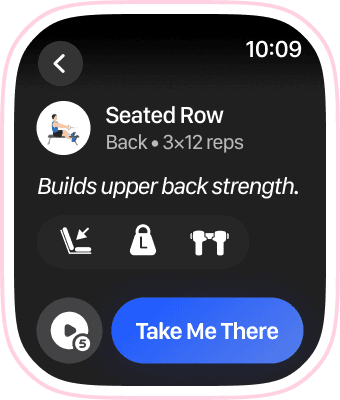
Users were unsure how to proceed
4/5 participants hesitated on this screen. Icons and brief text did not clearly explain machine setup or what action to take next, causing pauses
and uncertainty.
Solution
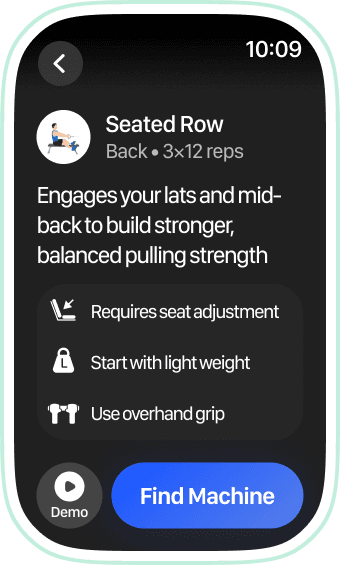
Added guidance and clearer actions
Detailed descriptions, labeled setup cues, and a visible demo entry point were added. The primary action was reframed as “Find Machine”, directly guiding users to the next physical step in the gym.
Clarifying Sets vs Rest Through Visual Hierarchy
Clarifying Shuffle Functionality with Icon
and Labels
Observed: Most participants couldn’t explain the ring colors without guessing
P1
P3
P4
P5
Issue
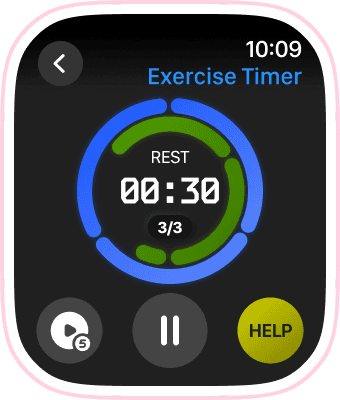
Users couldn’t tell what each ring represented
3/4 participants confused set timers and rest timers. The color-only system lacked explanation and disrupted workout flow.
Solution
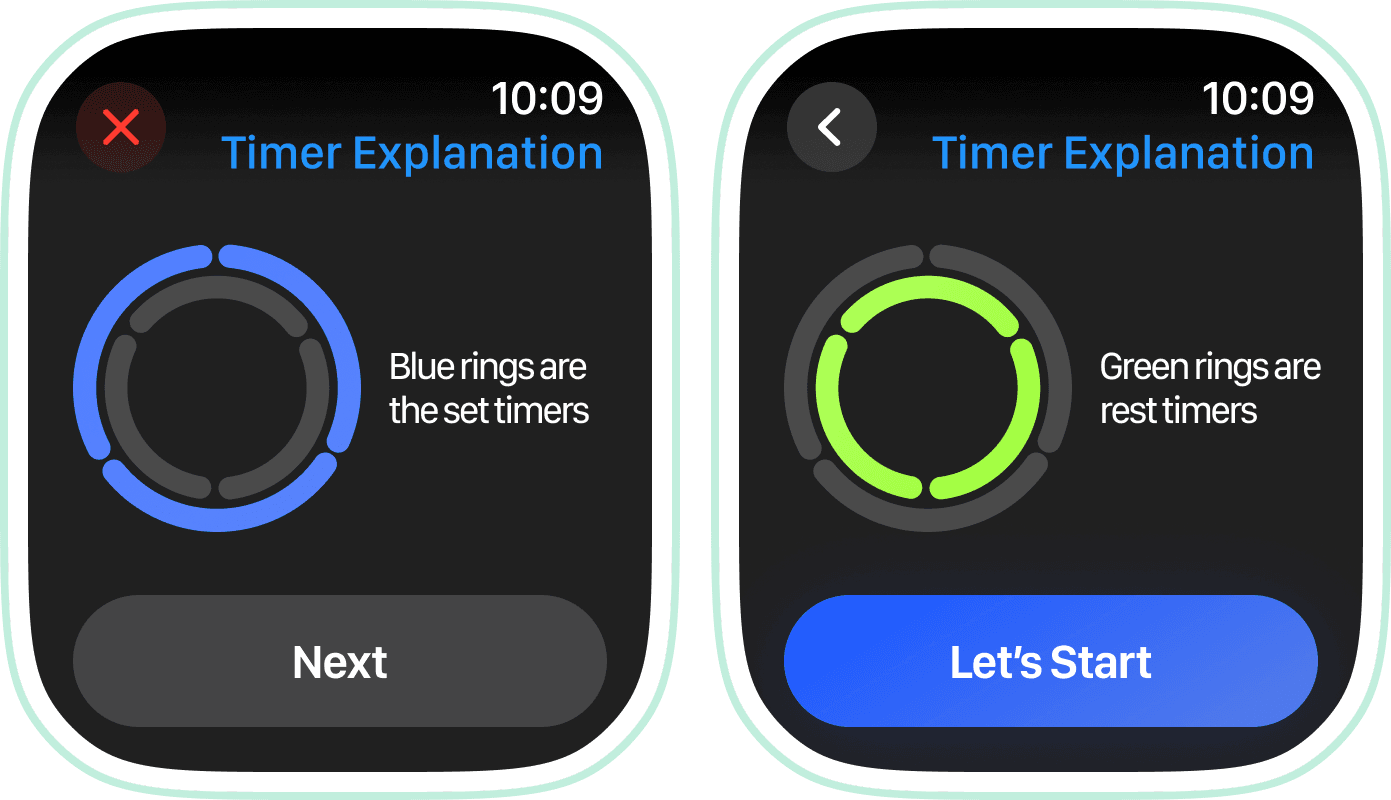
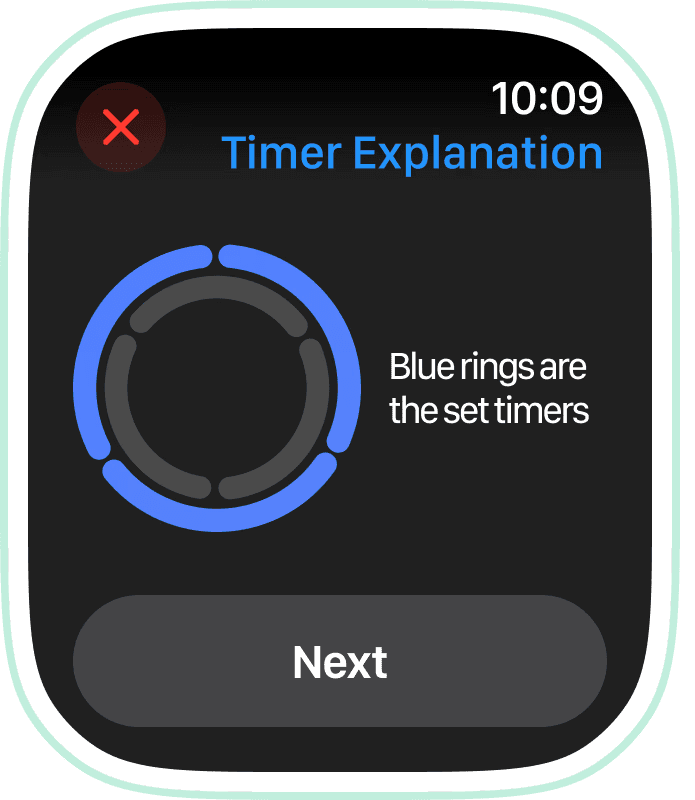
Explained ring meaning and reduced visual noise
A brief explanation screen clarified ring colors, inactive timers were visually muted, and the Help button was made more noticeable. This helped users understand the system at a glance and stay focused on their workout.
Market Validation
Market Validation
De-risking Klaro Through Real-World Behavior
De-risking Klaro Through Real-World Behavior
Before investing in a full system, I ran low-fidelity pretotype experiments to validate key assumptions around interest, navigation, and help-seeking behavior. Each test focused on behavior, not opinions.
Before investing in a full system, I ran low-fidelity pretotype experiments to validate key assumptions around interest, navigation, and help-seeking behavior. Each test focused on behavior, not opinions.
Workflow Pilot
Validating Step-by-Step Gym Navigation
Validating Step-by-Step Gym Navigation
Hypothesis: Step-by-step navigation will help beginners find machines faster and feel more confident in unfamiliar gyms.
Hypothesis: Step-by-step navigation will help beginners find machines faster and feel more confident in unfamiliar gyms.
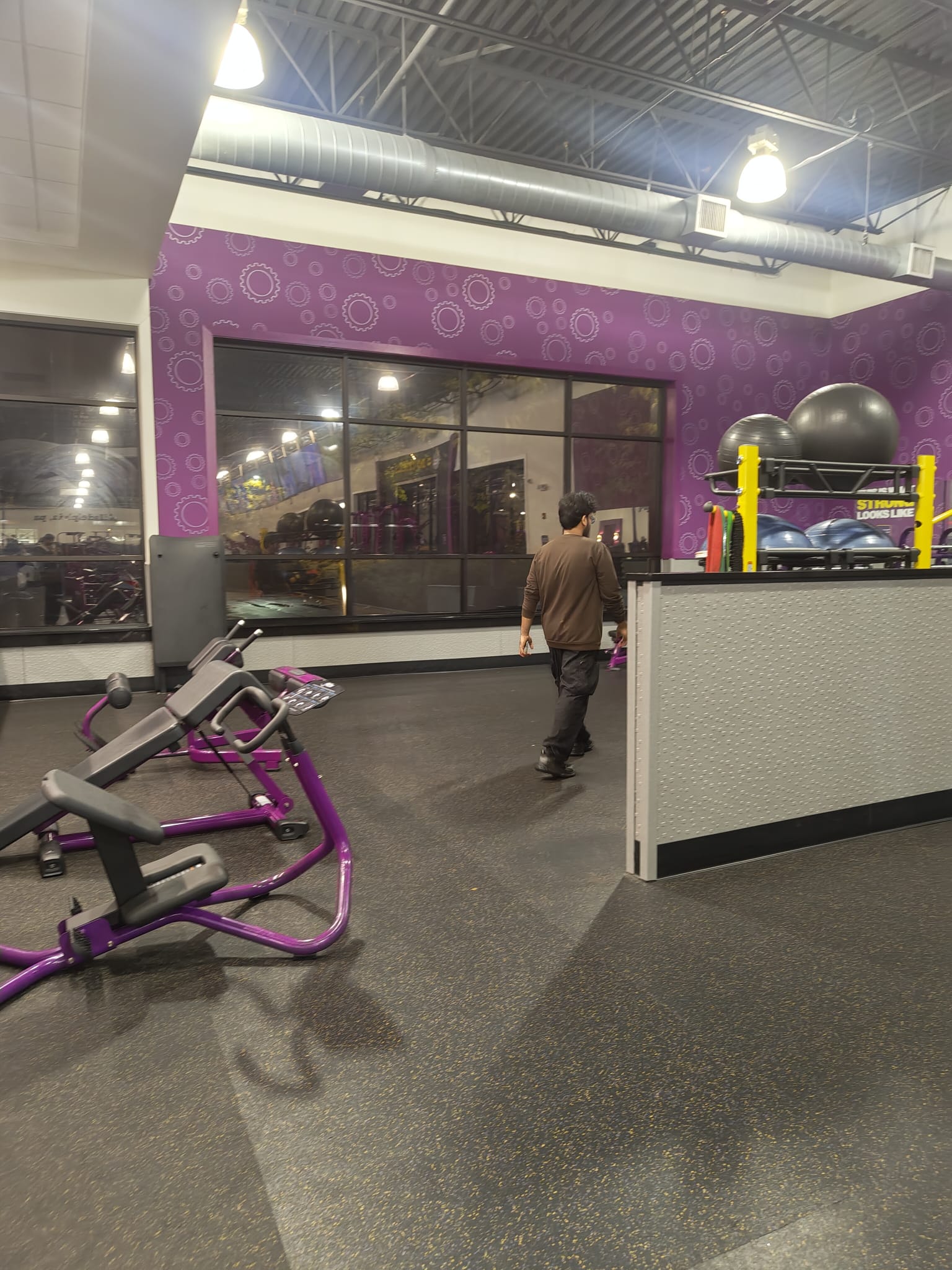
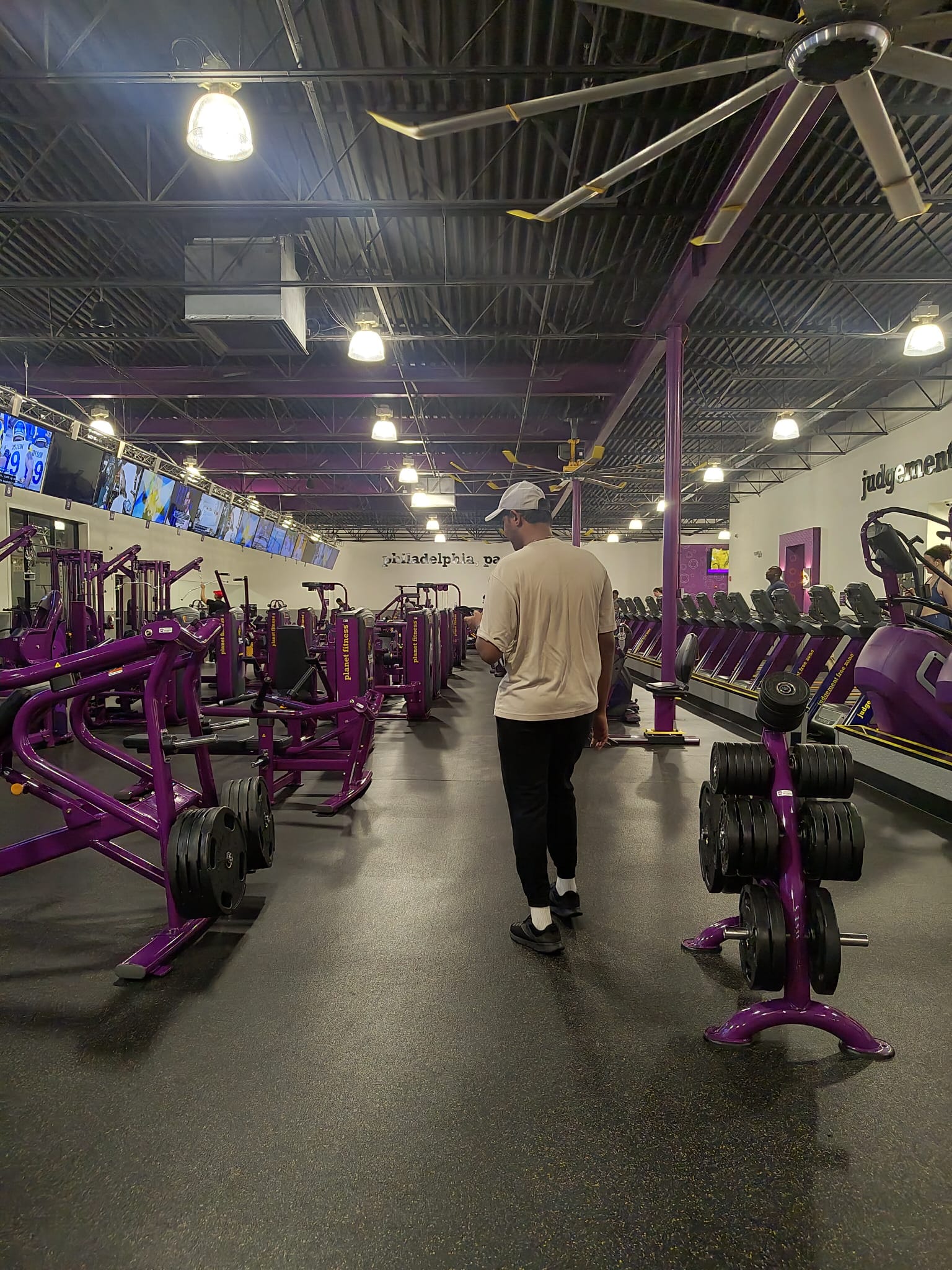
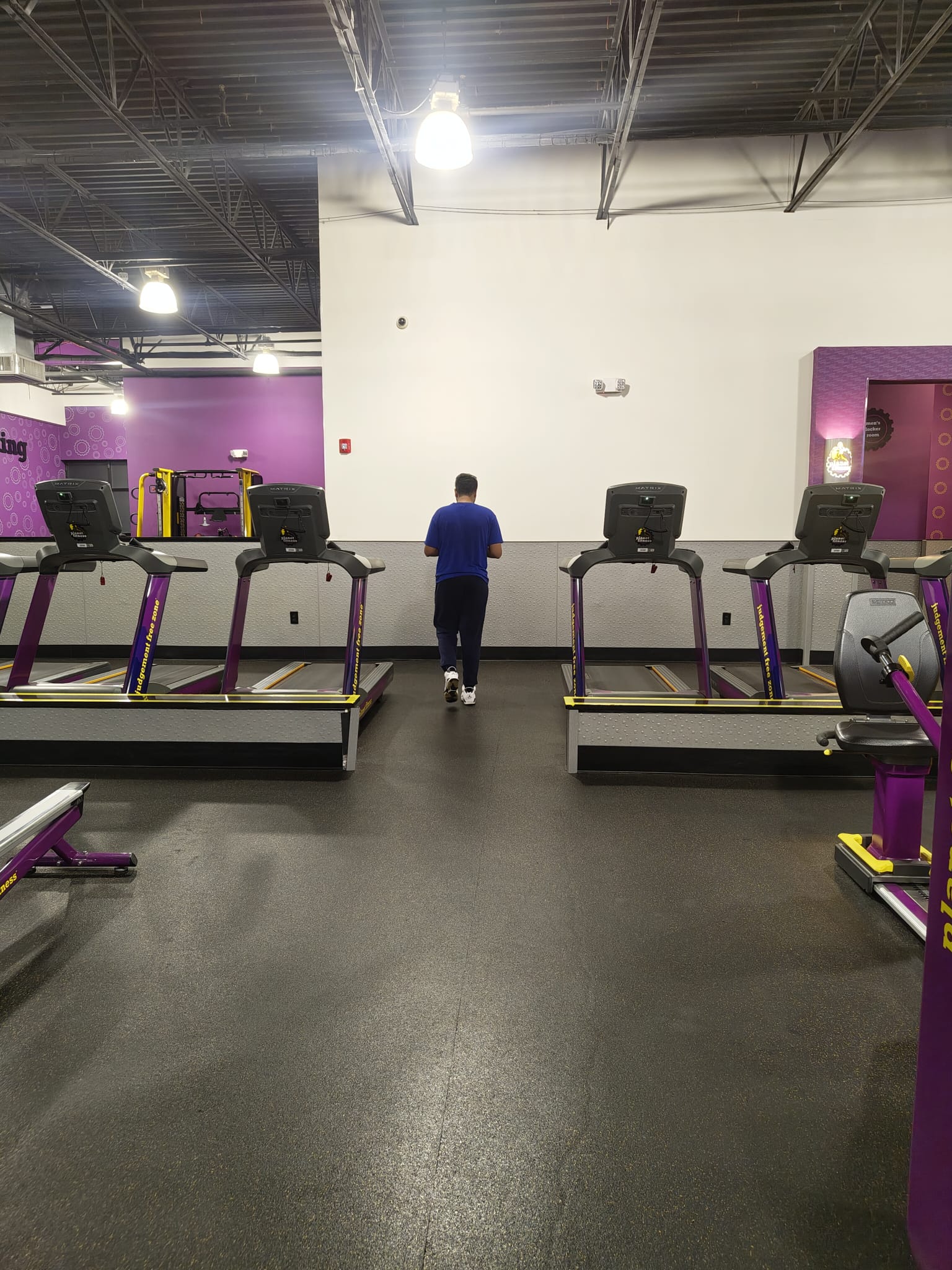
Method: Tested a low-fidelity map prototype inside a real gym and compared performance during equipment-finding tasks.
Method: Tested a low-fidelity map prototype inside a real gym and compared performance during equipment-finding tasks.
Result: 2 of 4 participants located machines faster with fewer wrong turns, and self-reported confidence increased by 1–2 points (1–5 scale).
Result: 2 of 4 participants located machines faster with fewer wrong turns, and self-reported confidence increased by 1–2 points (1–5 scale).
Decision: Proceeded with step-by-step, in-the-moment guidance as Klaro’s core interaction to reduce hesitation during “visible uncertainty” moments.
Decision: Proceeded with step-by-step, in-the-moment guidance as Klaro’s core interaction to reduce hesitation during “visible uncertainty” moments.
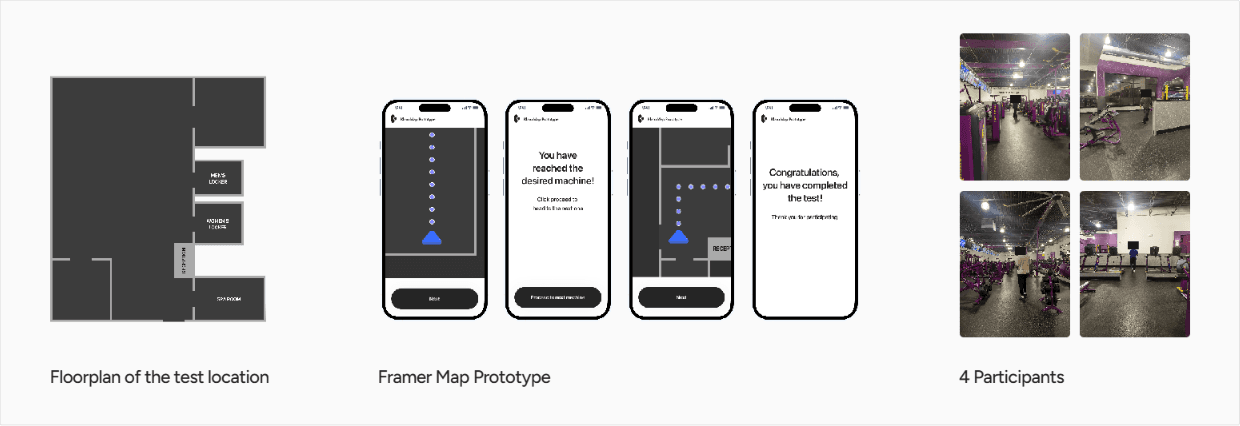
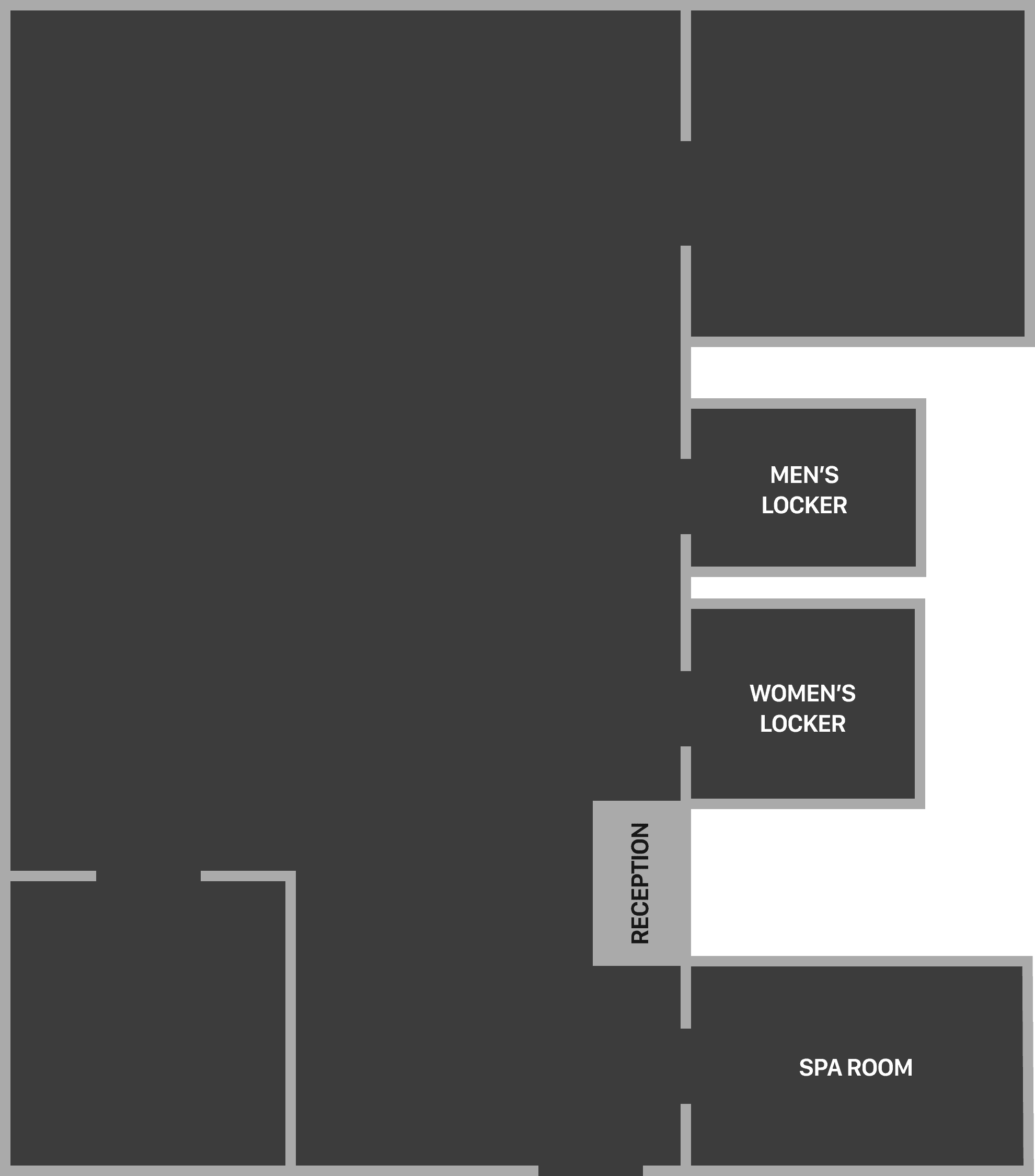
Floorplan of the test location
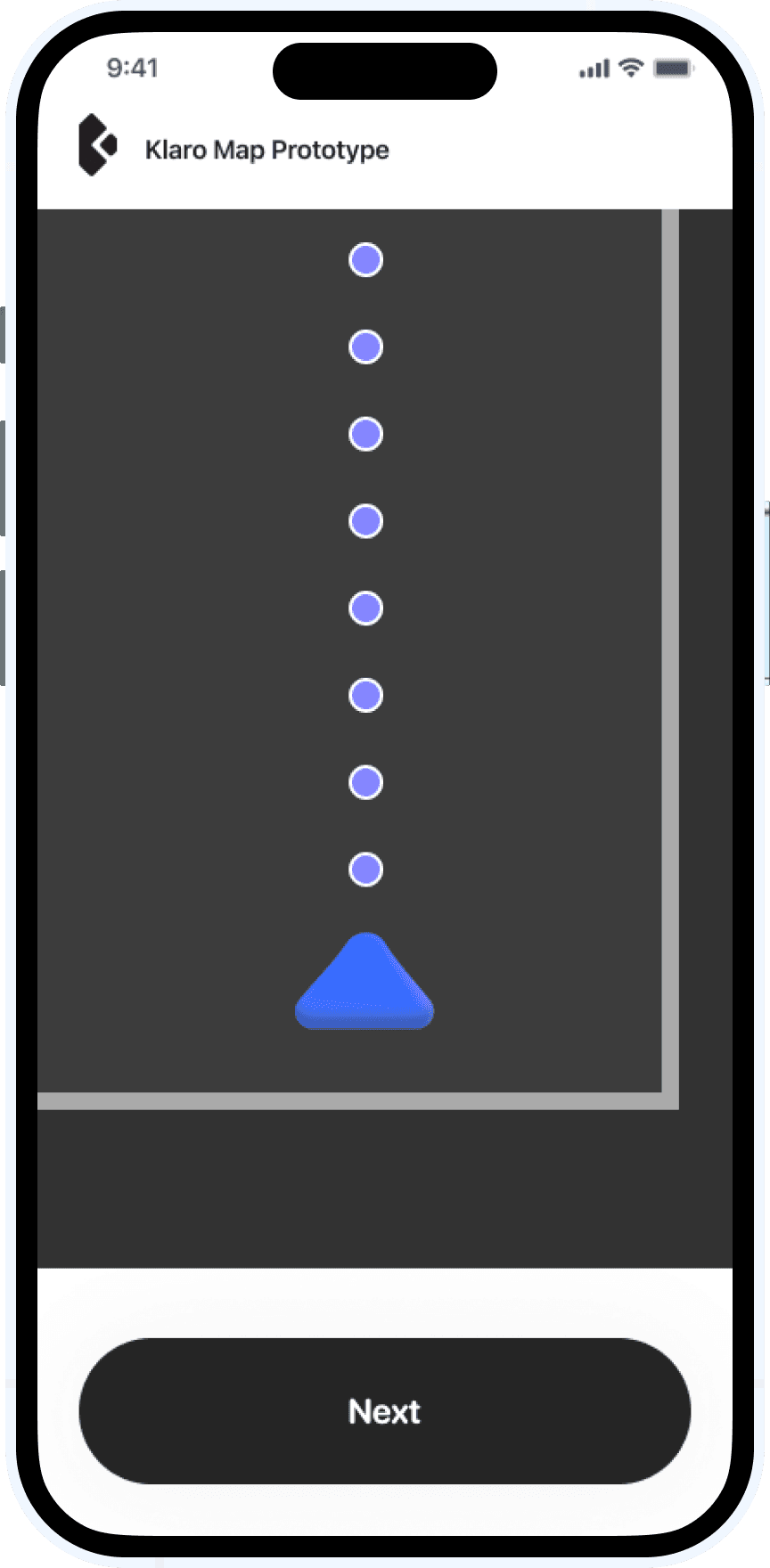
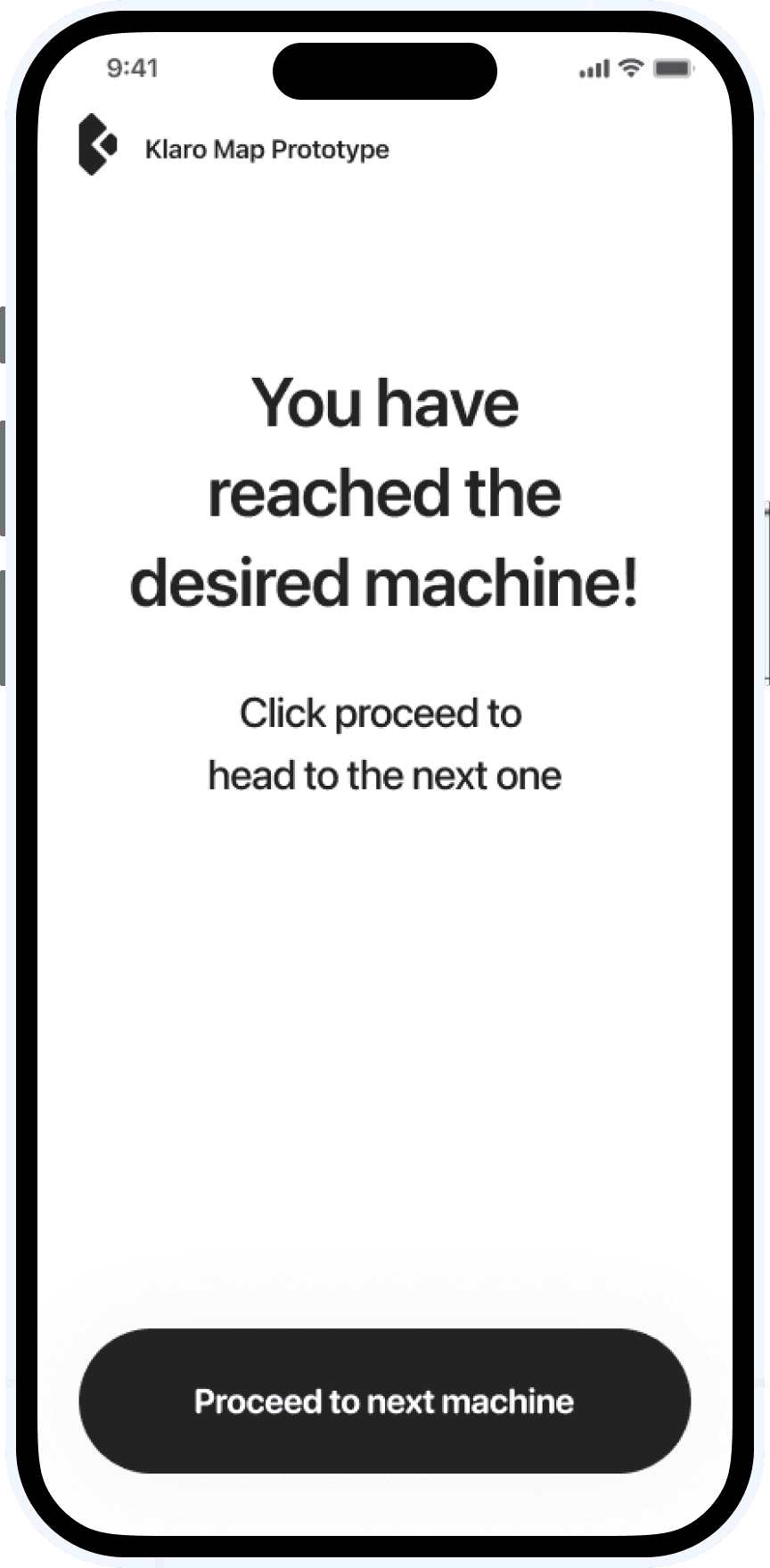
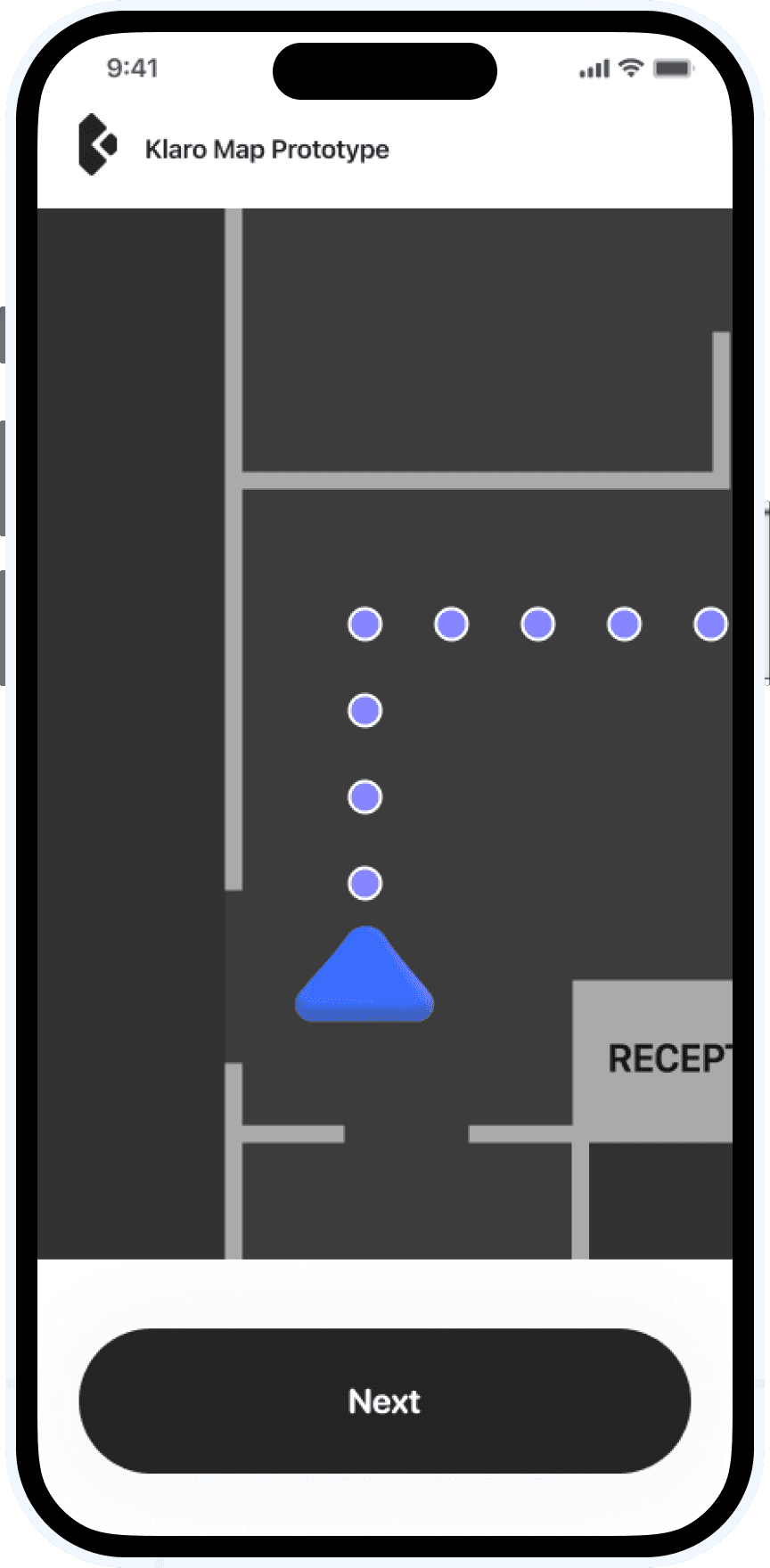
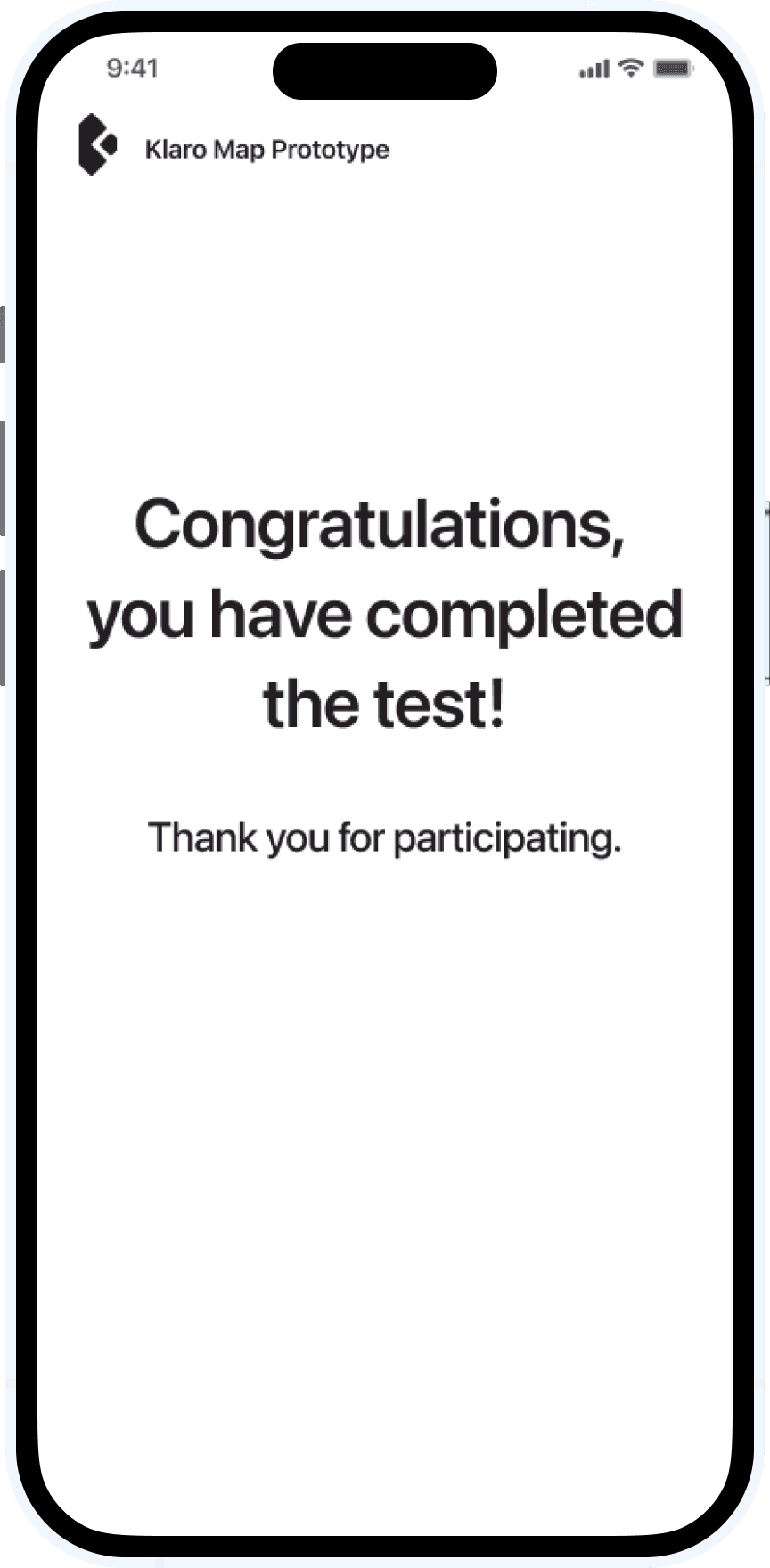
Framer Map Prototype
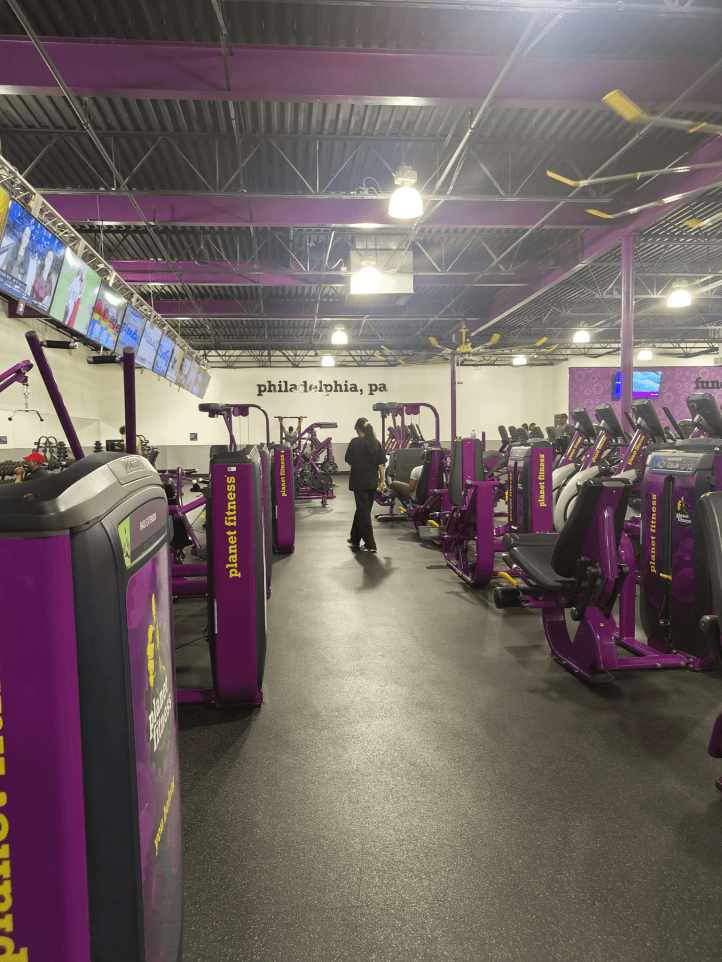
4 Participants
Experience Prototype
Testing Willingness to Ask for Help
Testing Willingness to Ask for Help
Hypothesis: When help is one tap away, beginners will use it frequently during uncertainty moments.
Hypothesis: When help is one tap away, beginners will use it frequently during uncertainty moments.
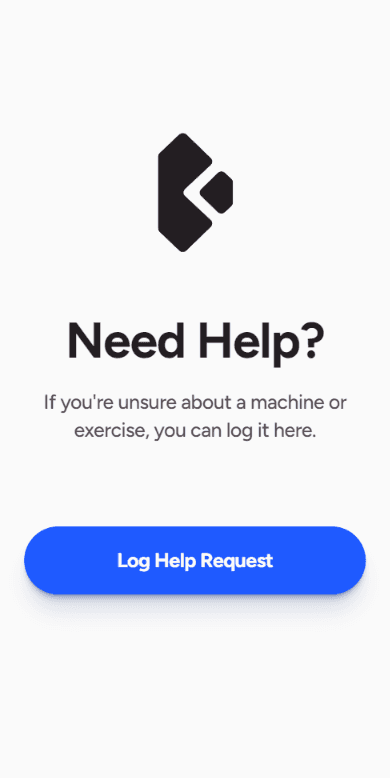
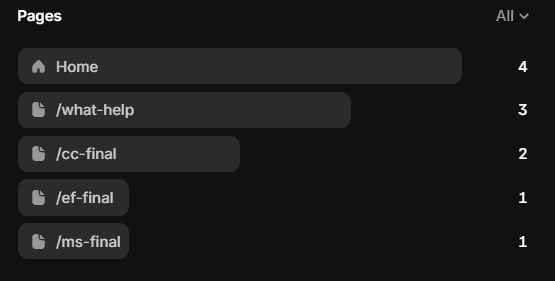
Method: Deployed a facade “Help” feature in Framer and observed real usage over one week.
Method: Deployed a facade “Help” feature in Framer and observed real usage over one week.
Result: Participants tapped the help button 3 times total, below the expected 6 taps based on how often they hit uncertainty moments during the flow.
Result: Participants tapped the help button 3 times total, below the expected 6 taps based on how often they hit uncertainty moments during the flow.
Decision: Shifted the design toward lower-friction support: more proactive prompts and guidance before users have to self-identify as “needing help.”
Decision: Shifted the design toward lower-friction support: more proactive prompts and guidance before users have to self-identify as “needing help.”
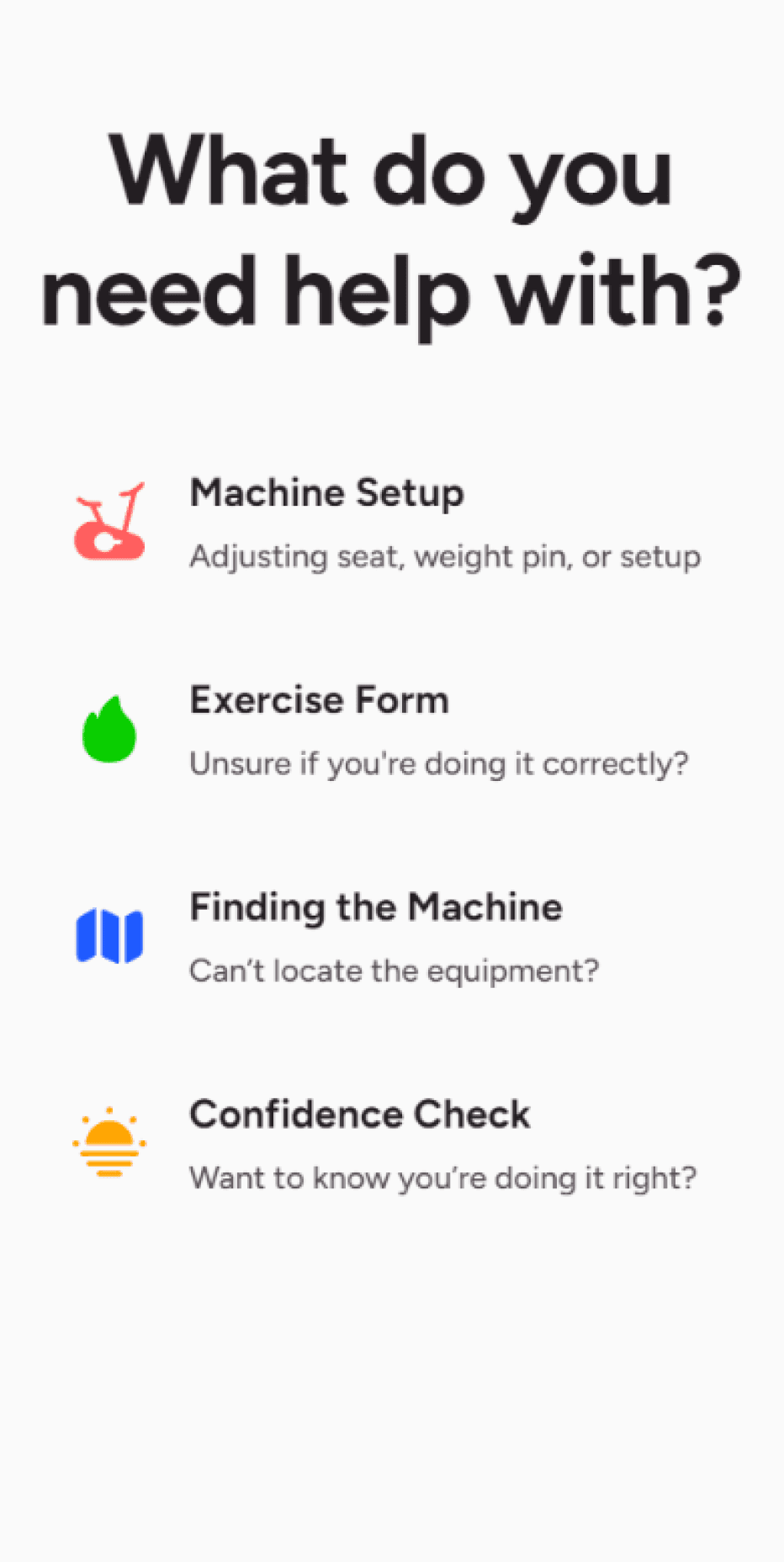
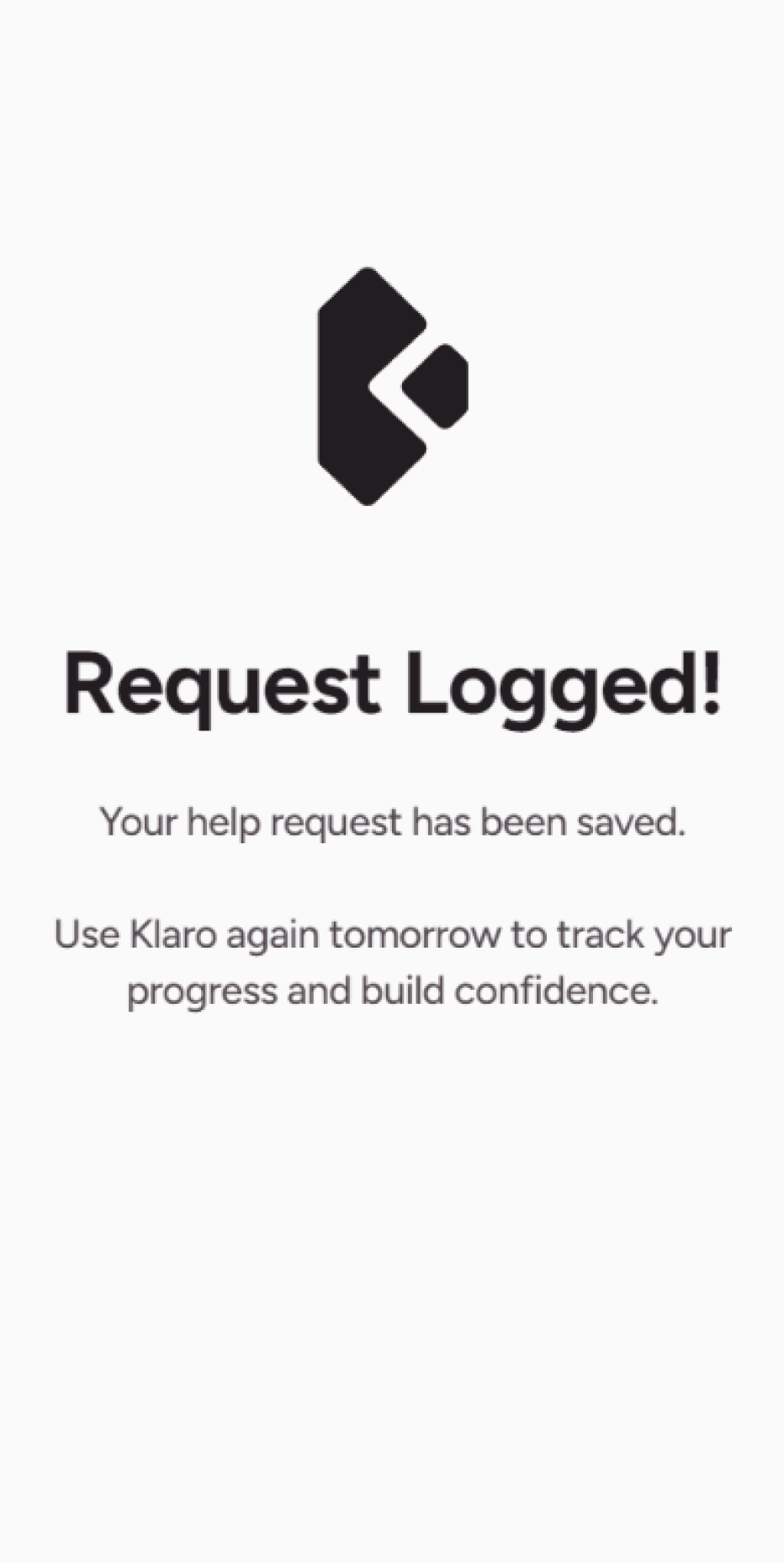
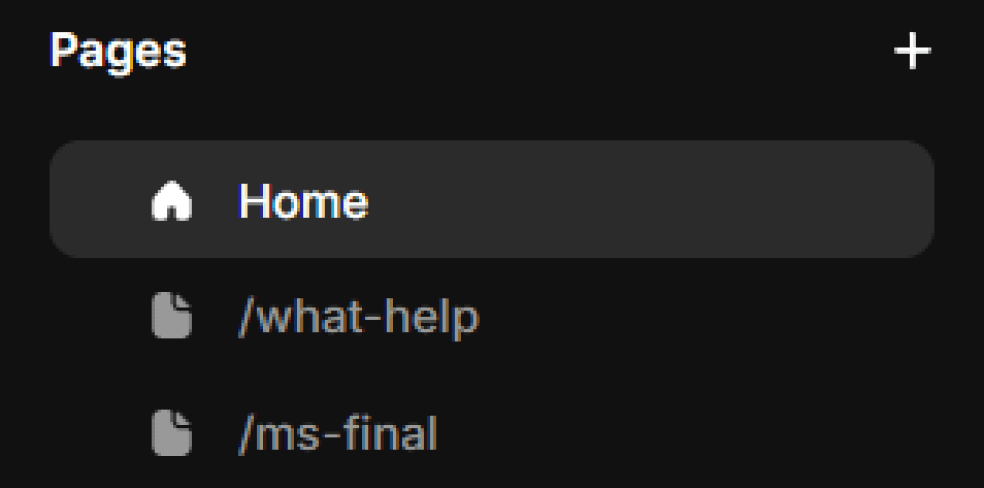
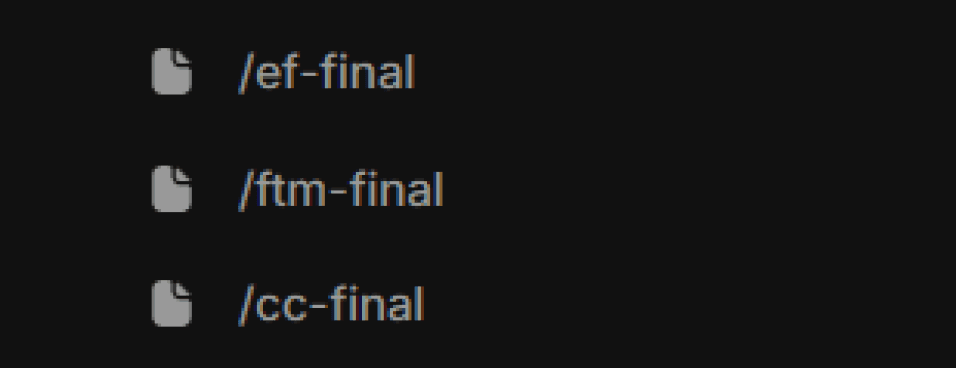
Help Website for Klaro
Page Tracking
Tracking Data
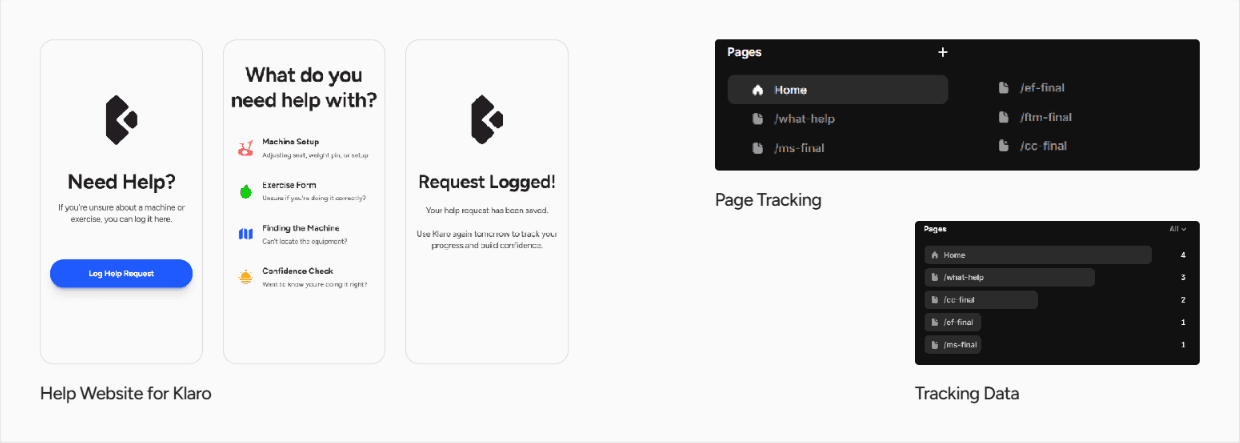
Demand Validation Experiment
Validating Interest in a Smartwatch App
Validating Interest in a Smartwatch App
Hypothesis: Beginners will show early interest in a smartwatch-first gym guidance concept when presented clearly.
Hypothesis: Beginners will show early interest in a smartwatch-first gym guidance concept when presented clearly.
Method: Built a Framer landing page describing Klaro’s in-gym smartwatch guidance and added a waitlist sign-up.
Method: Built a Framer landing page describing Klaro’s in-gym smartwatch guidance and added a waitlist sign-up.
Result: 49 unique visitors and 7 sign-ups (~14% conversion rate).
Result: 49 unique visitors and 7 sign-ups (~14% conversion rate).
Decision: Continued investing in the smartwatch-first direction and positioned Klaro around discreet, in-gym guidance rather than a phone-first coaching experience.
Decision: Continued investing in the smartwatch-first direction and positioned Klaro around discreet, in-gym guidance rather than a phone-first coaching experience.
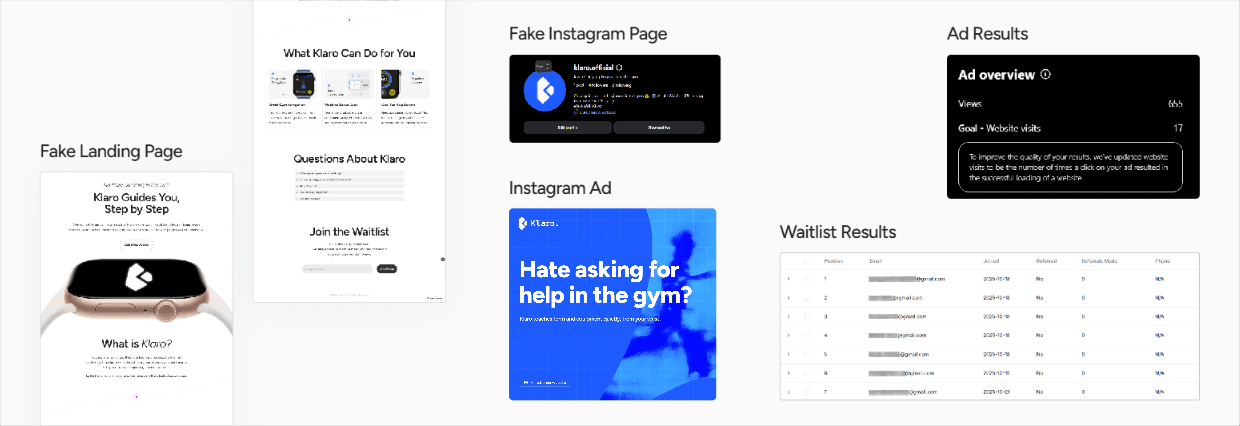
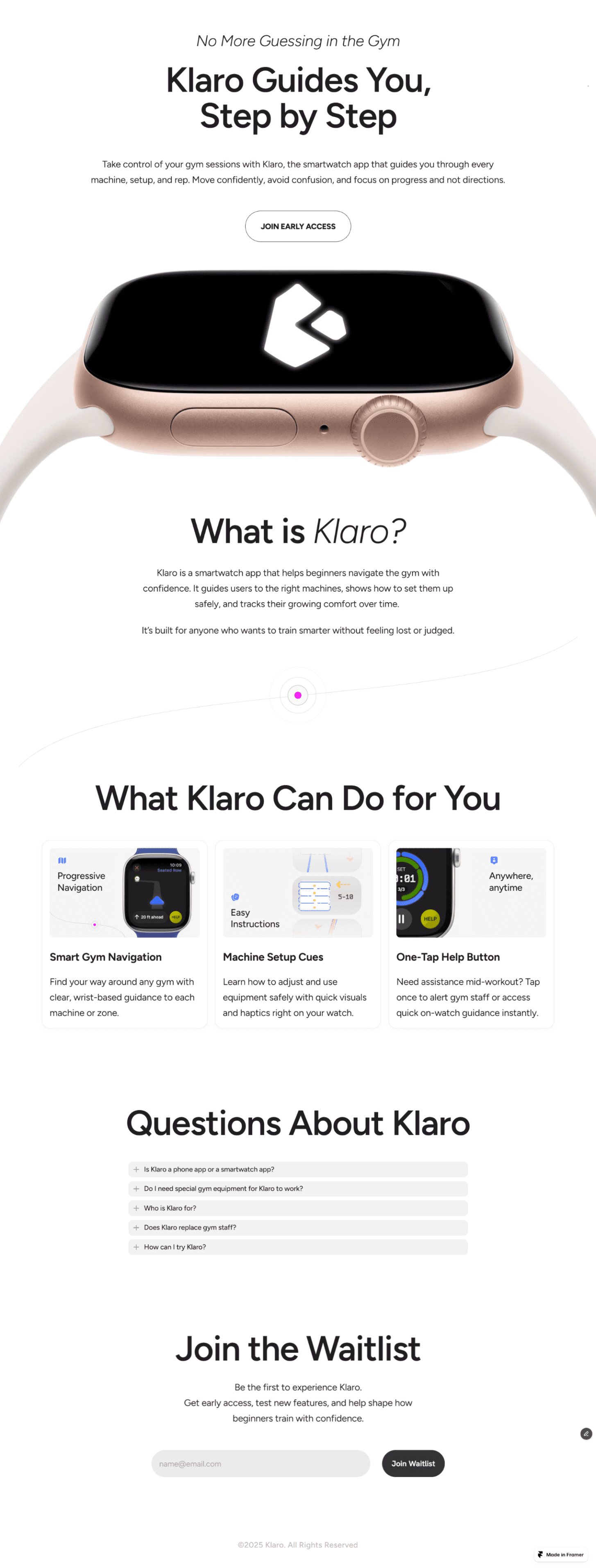
Fake Landing Page
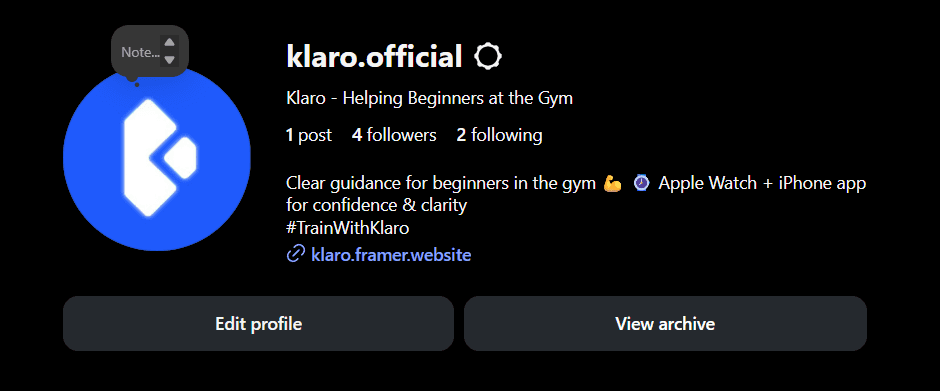
Fake Instagram Page
Instagram Ad
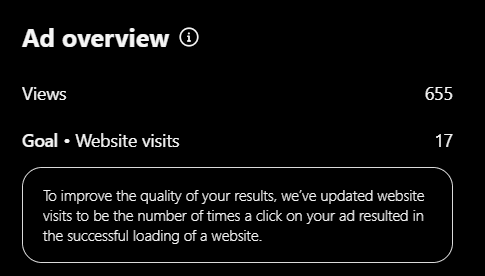
Ad Results
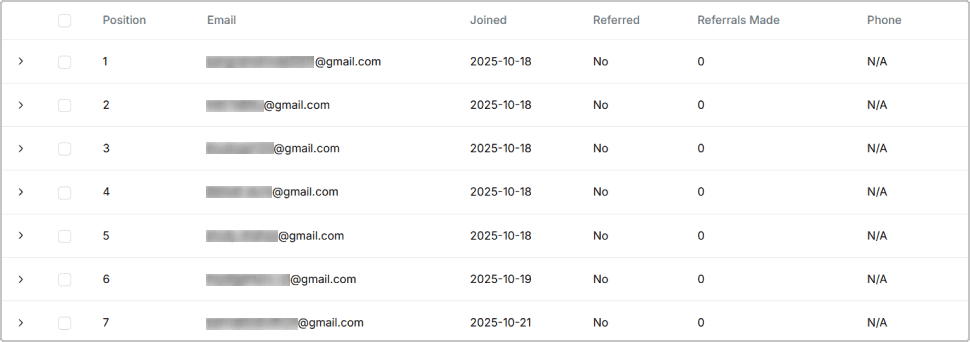
Waitlist Results
Future Changes
Future Changes
What I’d Improve With More Time
What I’d Improve With More Time

Validate that confidence gains persist beyond week 1
Validate that confidence gains persist beyond the first week
Ensure beacon navigation remains reliable across different gym layouts
Ensure beacon navigation remains reliable across different gym layouts
Reduce gym staff response time when users request help
Reduce gym staff response time when users request help
More where this came from!
More where this came from!


Explore other projects where I design products at the intersection of behavior, systems, and real-world constraints.
Explore other projects where I design products at the intersection of behavior, systems, and real-world constraints.



2026 Adarsh Mokashi. All Rights Reserved.
Designed with

UX textbooks,
gaming breaks, and a sprinkle of

chaos.
2026 Adarsh Mokashi. All Rights Reserved.
Designed with
UX textbooks,
gaming breaks, and a sprinkle of
chaos.
2026 Adarsh Mokashi. All Rights Reserved.
Designed with
UX textbooks,
gaming breaks, and a sprinkle of
chaos.
2026 Adarsh Mokashi. All Rights Reserved.
Designed with
UX textbooks,
gaming breaks, and a sprinkle of
chaos.